
To switch direct deposit safely, establish and fund the new credit-union account first, give the correct account details to your employer or benefit payer, and ask when the change will take effect. Keep the old account open until a complete deposit reaches the new account and all remaining withdrawals have cleared.
Prepare the New Account Before Updating Direct Deposit
Open and fund the new credit-union account before changing where your pay is sent. Confirm the routing number, account number, and account type that the employer or other payer will need. Review the details carefully before submitting them; an incorrect number could interfere with the change.
Next, make a list of activity connected to the old account. Include automatic bill payments, recurring transfers, outstanding checks, and charges that occur less frequently. Direct deposit controls incoming money, but changing it does not automatically redirect these outgoing transactions.
Keep enough money in the old account to cover expected withdrawals during the transition. This cushion matters because payroll changes may not take effect immediately, while scheduled payments and uncleared checks can continue reaching the old account. Preparing both sides of the move reduces the chance of a returned payment, fee, or temporary loss of access to funds.
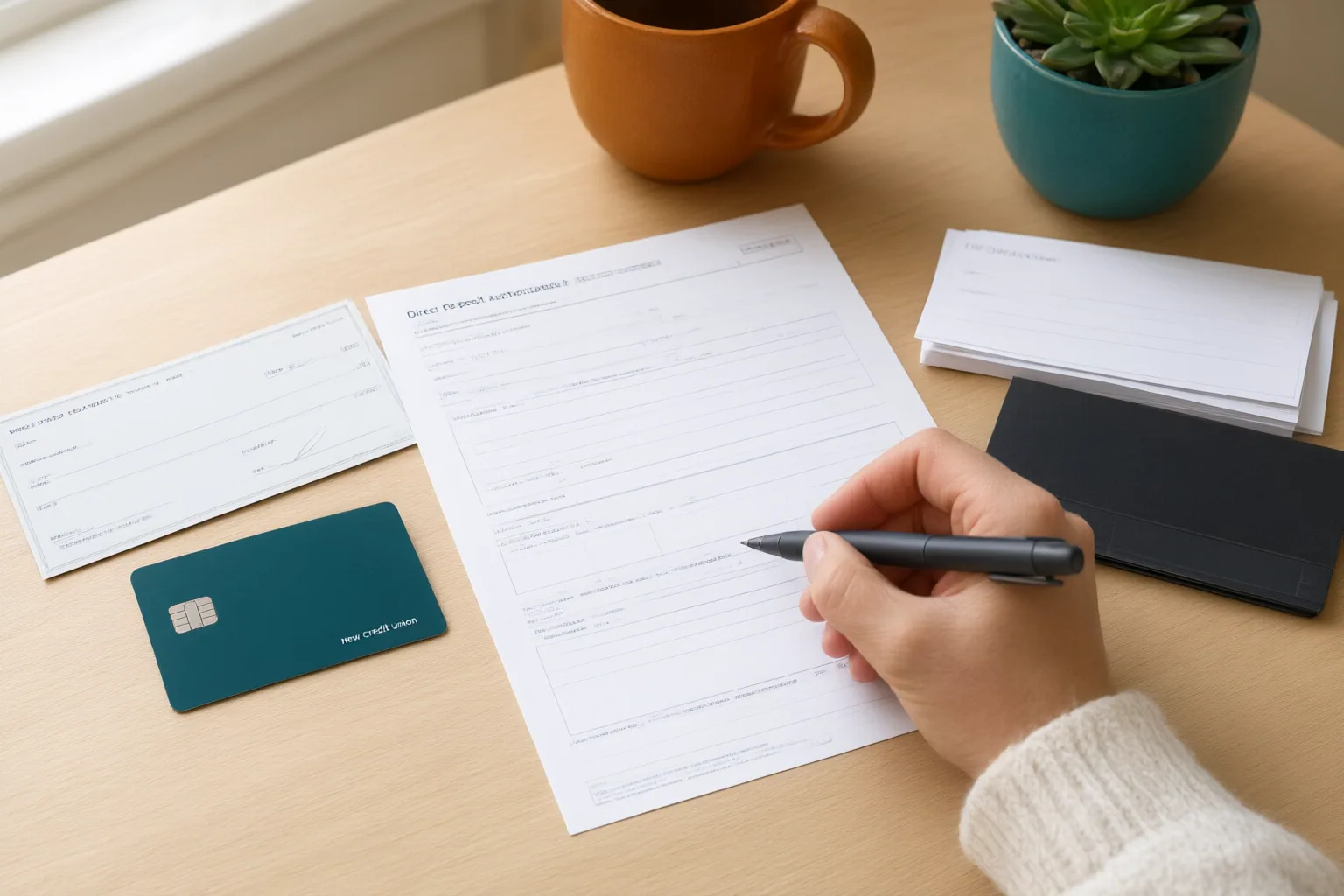
Submit the Change to Your Employer or Benefit Payer
Provide the new account information through the process specified by your employer, payroll portal, or other payment source. After submitting the request, ask when it is expected to become effective. Do not assume the next payment will automatically reach the new account, because payer procedures and timing vary.
If you receive Social Security benefits, follow the Social Security Administration’s process instead of an employer payroll procedure. The SSA says recipients can sign in online to update their bank information. If the online update cannot be completed, the agency provides next steps and also offers telephone and appointment options.
The SSA also says a financial institution may be able to transmit updated direct-deposit information through its Automated Enrollment process. However, not every institution offers that service, so confirm availability rather than relying on it. Whichever path applies, retain the old account while the request is being processed and monitor where the next payment arrives.

Keep Both Accounts Active During the Transition
Monitor both accounts after requesting the change. The next paycheck or benefit payment may still be sent to the old account, so leave that account open and sufficiently funded. Closing or emptying it too early can disrupt an incoming deposit or cause a pending withdrawal to be returned.
Wait until a complete paycheck or benefit payment appears in the new account before treating the direct-deposit change as finished. A real deposit provides stronger confirmation than relying only on an estimated effective date. Continue checking the old account for outstanding checks, automatic payments, transfers, and less-frequent recurring charges.
Move automatic bills and recurring transfers separately, preferably after incoming funds are established in the new account. Review each payment instruction and then watch both accounts for remaining activity. This overlap may require extra attention, but it helps protect access to income while obligations move from one account to the other.
Only prepare to close the old account after all deposits and withdrawals have moved and remaining transactions have cleared. Then transfer the residual balance and request written confirmation of the closure.
Conclusion
The safest sequence is to establish and fund the new account, verify its deposit details, submit them to the appropriate payer, and ask for the expected effective date. Keep the old account active until a complete deposit reaches the new account, then move recurring withdrawals and allow pending transactions to clear.
Because payer procedures and effective dates vary, confirm the timing directly with the employer or payment source. Use a checklist today: verify the new account information, inventory old-account activity, contact the payer, and identify the first deposit you will monitor. After everything has moved, transfer the remaining balance and obtain written confirmation when closing the old account.
Disclosures and limitations
- This article was prepared with AI assistance using the supplied source-backed research package. It provides general financial education; confirm procedures and effective dates directly with your employer, benefit payer, and financial institution.
Related reading
- Practical Financial Guidance for Everyday Decisions
- Overdraft Opt-In: What It Covers and Why Transactions Can Still Be Declined
Sources
- How to Switch Banks Without Missing a Payment (2026) — switchwize.com
- Update direct deposit — Social Security
- How to Move Direct Deposits and Autopayments When Switching Banks (October 2026) Full Guide — Fin Forum
- How to Switch Banks Without Missing a Direct Deposit | MindfulMoney — mindfulmoney.net
- How Do I Switch My SSA Direct Deposit to a New Bank? — withpurple.com
- Change Direct Deposit When Switching Banks: Safe Steps — My Check Pros
- How to Switch to a Credit Union: Steps and Tips | Investor.org — Investor.org
- How to Change Direct Deposit to a New Bank Account — Unanswered
- Social Security Administration | Direct Deposit — ssa.gov