
Check washing occurs when a stolen check is altered—typically by changing the payee, the amount, or both—and then deposited fraudulently. To recognize a check-washing scam, inspect processed checks closely, confirm that mailed payments reached the intended recipients, and act promptly when a check appears altered or goes missing.
What Check Washing Is and How It Happens
A check-washing scheme begins when someone obtains a legitimate check, often by stealing it from the mail. The thief may use chemicals to remove ink and replace the original payee name or dollar amount before depositing the check. Criminals may also use a copier or scanner to create fraudulent versions of a stolen check.
Because the altered payment may still be processed, seeing that a check cleared does not necessarily confirm that the intended recipient received the money. One important warning is a check shown as cashed even though the named recipient says it never arrived. Senders should therefore verify both sides of a mailed payment: review the processed check image and confirm delivery with the intended payee. This can help reveal changes that might otherwise remain unnoticed until a bill is reported unpaid or suspicious account activity is flagged.
Warning Signs of a Washed or Stolen Check
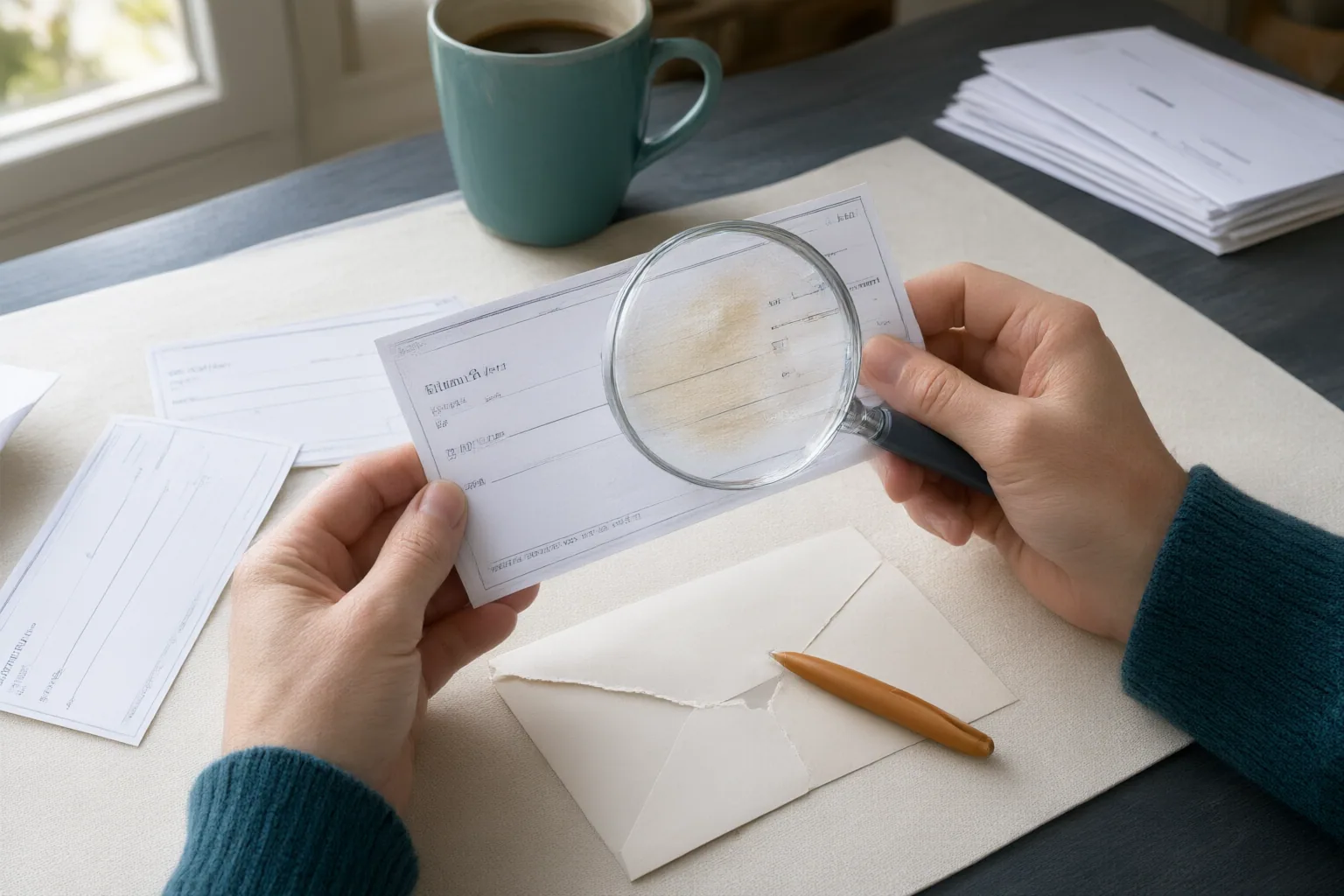
A washed check can initially appear normal, so inspect the processed image carefully rather than relying on a quick glance. Possible physical clues include faded or blotchy areas where ink may have been removed, a changed paper texture, inconsistent handwriting or ink, distorted watermarks, and numbers that do not line up properly. Compare the displayed payee and amount with your records, looking closely at individual letters and digits.
Account and payment activity can provide additional warnings. A mailed check that takes unusually long to post, never reaches its intended recipient, or appears as cashed despite the recipient reporting that it was not received deserves prompt attention. In some cases, the sender may not know that a check is missing until the payee follows up or the financial institution identifies suspicious activity or insufficient funds.
The consequences described by the research source can extend beyond the value of the check. They may include an unpaid bill, delayed reimbursement, account restrictions, credit harm, and exposure of personal or banking information printed on the check. No single visual clue establishes what happened, but an unexpected payee, amount, or payment status is a reason to contact the relevant parties without delay.

How to Protect Checks Sent Through the Mail
Safer mail handling can reduce the time an outgoing check remains unattended. The U.S. Postal Inspection Service advises depositing outgoing mail before the last scheduled collection and using a blue collection box or a local Post Office. Avoid leaving outgoing or incoming mail in a mailbox overnight, and retrieve delivered mail frequently.
Plan for periods when you will be away. During a vacation, arrange for the Post Office to hold your mail or ask a trusted friend or neighbor to collect it. These steps apply to incoming mail as well as payments you send, since a mailbox may contain checks or documents carrying personal and banking information.
After mailing a check, keep track of whether the payment posts and whether the intended recipient confirms receipt. When a check clears, examine its image for alterations rather than treating the account entry alone as proof that it reached the correct person. Pay particular attention to the payee, amount, alignment of numbers, handwriting, ink, paper appearance, and watermark. If a payment remains outstanding longer than expected, contact the recipient instead of waiting indefinitely for the discrepancy to resolve.
Conclusion
If you suspect check washing, first contact the intended payee to determine whether the payment arrived. Notify your financial institution promptly when a check is missing or appears altered, and request a stop payment when applicable. The U.S. Postal Inspection Service also directs people affected by or witnessing check washing to report it to the Postal Inspection Service, local police, and a credit reporting bureau.
Take a concrete step today: review images of your recent processed checks, compare each payee and amount with your records, and confirm that any outstanding mailed payments reached their intended recipients. Promptly report a mismatch or missing check rather than assuming that a cleared or delayed payment is correct.
Disclosures and limitations
- This article was prepared with AI assistance using only the supplied research package, which cites the U.S. Postal Inspection Service and LifeLock materials. It provides general fraud-awareness information and does not claim personal testing, product use, or firsthand experience.
Related reading
- Account Security and Fraud Awareness
- Target Black Friday: How to Check Deals and Shop More Carefully
Sources
- What is check washing, how it works, and how to protect yourself — lifelock.norton.com
- Check Washing – United States Postal Inspection Service — uspis.gov